Low-Code Platforms: Principles, Benefits and Future Trends
Strip away the hype and low-code is a simple trade: you give up writing some code by hand, and in return you ship faster and change things without a rewrite. Here is how it actually works, where it genuinely pays off, where it bites — and where it is heading.
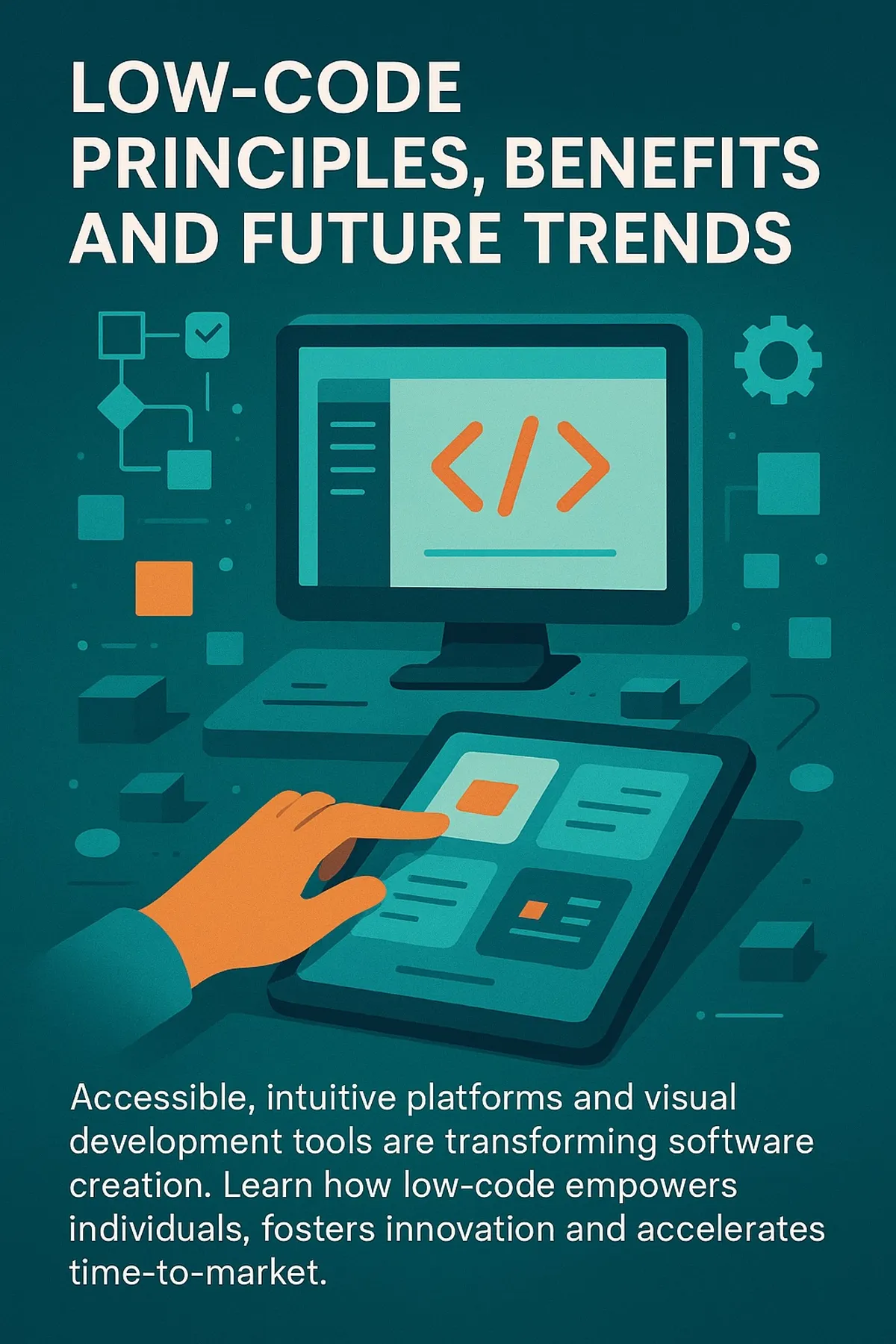
Software is eating the world, and most companies can’t hire developers fast enough to keep up. Low-code is the pragmatic answer: build simple — and surprisingly complex — apps with little hand-written code. And it isn’t a fad. By the end of 2025, more than 70% of new business applications are projected to be built with low-code tools.
Why Low-Code Is Becoming So Important
The real shift isn’t “less typing”. It’s who gets to build. When the interface — not the codebase — is the surface you work on, the analyst who actually understands the process can shape the tool, instead of filing a ticket and waiting a quarter for it.
It also frees professional developers from the plumbing — auth, CRUD screens, basic integrations — to spend their time where the work is genuinely hard. The team stops arguing about scaffolding and starts arguing about the business logic, which is the argument worth having.
Core Principles of Low-Code Platforms
Low-code approaches to building software products rely on several key principles:
- Visual development – applications are designed through an interface with drag-and-drop components rather than handwritten code only.
- Abstraction of technical details – the need for deep programming is minimised for many standard scenarios.
- Reuse of components – standard blocks can be used across multiple projects.
- Rapid prototyping and iteration – faster development and testing cycles.
- Cross-platform delivery – the ability to target web, mobile and sometimes desktop with the same model.
- Flexibility and scalability – support for growth of the project without rewriting the architecture.
- Integration capabilities – easy connection to databases, APIs and third-party services.
Benefits of Low-Code for Your Organisation
Fast time-to-market
Thanks to visual interfaces and ready-made modules, new solutions can be built several times faster than with traditional stacks. For many teams this is the difference between shipping in weeks instead of months.
Optimised costs
Less code means less manual work, fewer specialists required and lower maintenance costs. Teams reuse components, patterns and integrations instead of reinventing them each time.
Higher productivity
Developers can concentrate on business logic and UX rather than repetitive technical tasks. Business users can participate more actively in designing and refining workflows.
Flexibility and adaptability
Low-code platforms support iterative delivery and make it easier to respond to changing business requirements. New fields, processes or integrations can often be added without full refactoring.
Broader participation of users
Even specialists without a technical education can contribute to the creation of digital solutions — by configuring processes, forms and rules in a visual environment.
Better collaboration
Visual tools make communication between IT teams, designers and stakeholders clearer. Everyone can see how the process actually works instead of debating over abstract specifications.
Scalability and built-in support
Most platforms include monitoring, update and performance optimisation tools. This makes it easier to grow usage and add new modules over time.
Integration with existing systems
Low-code solutions can complement the organisation’s existing IT landscape instead of replacing it completely. New applications integrate with current databases, ERP, CRM or industry systems.
Limitations and Challenges of Low-Code
No tool is a free lunch, and the honest pitch matters more than the glossy one. Where low-code bites:
- Complex customisation. For very specialised scenarios, manual coding and custom extensions are still required.
- Platform lock-in. Migrating to another ecosystem may be difficult if the solution heavily depends on proprietary features.
- Performance limitations. Very large data volumes or extremely complex processes can require additional optimisation or even separate services.
- Security and control. Not every platform provides deep control over data, isolation and regulatory compliance out of the box.
How to Choose a Low-Code Platform
Before adopting a low-code solution, it is worth evaluating:
- the organisation’s functional needs and typical use cases,
- ease of use for both developers and business users,
- scalability, integration and performance capabilities,
- security features (encryption, access control, audit),
- total cost of ownership (licensing, operations, training).
Future Trends in Low-Code
- AI and machine learning. Built-in AI assistants will help design logic, generate tests and optimise application performance.
- Hybrid development models. Combining low-code, no-code and traditional coding to balance speed and flexibility.
- IoT and mobile scenarios. Platforms will expand support for sensors, devices and cross-platform mobile apps.
- DevOps and CI/CD integration. Low-code stacks will align better with modern deployment, version control and team workflows.
- Industry-specific solutions. More ready-made modules tailored for healthcare, finance, manufacturing, education and the public sector.
- Serverless architectures. Abstracting away infrastructure management so teams can focus on logic and scaling products.
- Security and compliance. Greater emphasis on data protection, certifications and adherence to regulatory requirements.
- Market consolidation. Larger technology vendors will continue to acquire smaller players, creating a more standardised low-code ecosystem.
Conclusion
Low-code is not just “simplified development”. It is a catalyst of digital change that helps accelerate business processes, reduce costs and involve a broader group of people in creating innovation.
For companies and public organisations, low-code is a chance to implement technological solutions faster, more affordably and more efficiently — without sacrificing quality.
In a world where digital transformation is a necessity, low-code opens new horizons for growth, collaboration and continuous improvement.