1. The shift away from monolithic ERP
For decades, organisations relied on large, tightly coupled ERP suites with rigid workflows, high customisation costs and slow innovation cycles. As reported in multiple enterprise migration studies, monolithic ERP systems struggle to keep pace with real-world business processes — especially in automation-heavy or distributed environments.
2. Modular architectures in modern open-source ERP
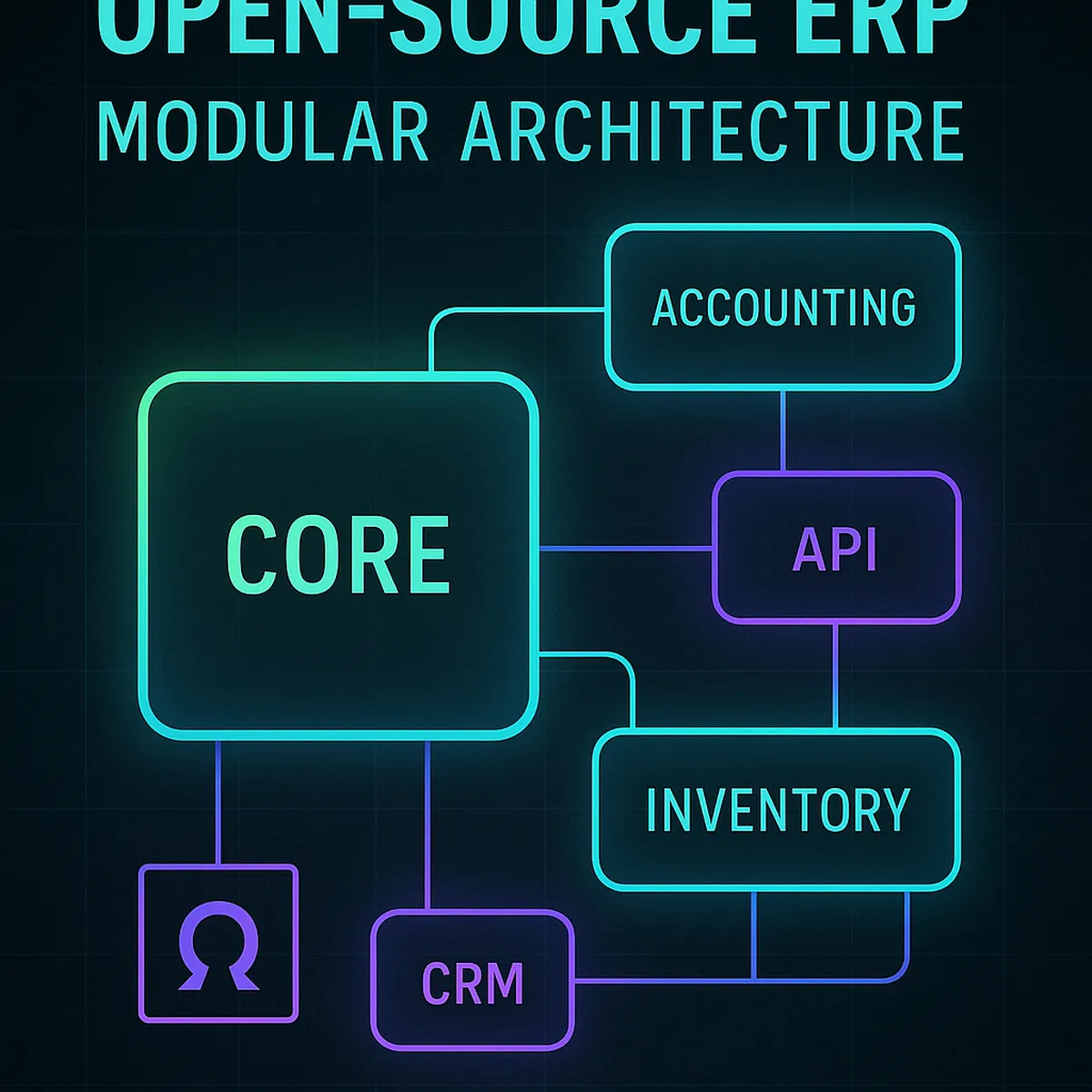
Open-source ERP platforms embrace modularity: each capability is a standalone module communicating through APIs, shared metadata and event-driven logic.
Examples from public GitHub projects
- ERPNext – DocTypes, API-first, event-driven scripting
- Odoo – thousands of community modules
- Tryton – strict domain modelling, stability-first
- Dolibarr – lightweight SMB-focused architecture
- Declarative ERP platforms – metadata-driven logic and automatic UI generation
3. Declarative logic: why it matters
Declarative business logic makes ERP systems predictable, maintainable and fast to implement. Behaviour is defined by rules, not imperative scripts, leading to easier debugging and consistent execution.
FORM Orders
  FILTER status = 'Pending';
  GROUP BY customer;
  CALCULATE total = SUM(amount);
4. Why companies choose open-source ERP
- Transparent cost and predictable TCO
- Full data ownership
- Open integrations (REST, GraphQL, events)
- Modifiability and long-term sustainability
- Community-driven innovation
5. Real-world adoption
Open-source ERP is favoured when workflows require flexibility, automation is crucial, or integration with WMS/MES/IoT systems is required. Public case studies show reduced TCO, faster delivery cycles and architectures that evolve with the organisation.
Conclusion
Open-source ERP is no longer experimental — it is a structural shift. Modular, declarative, API-driven architectures provide the flexibility and transparency businesses require today.